
Both dental implants and bridges can replace missing teeth. Neither is right for everyone; the better choice depends on your situation.
How they work
- Bridge: crowns on the teeth either side of a gap hold a false tooth. The supporting teeth need to be shaped.
- Implant: a titanium post is placed in the jawbone to support a crown, without relying on neighbouring teeth.
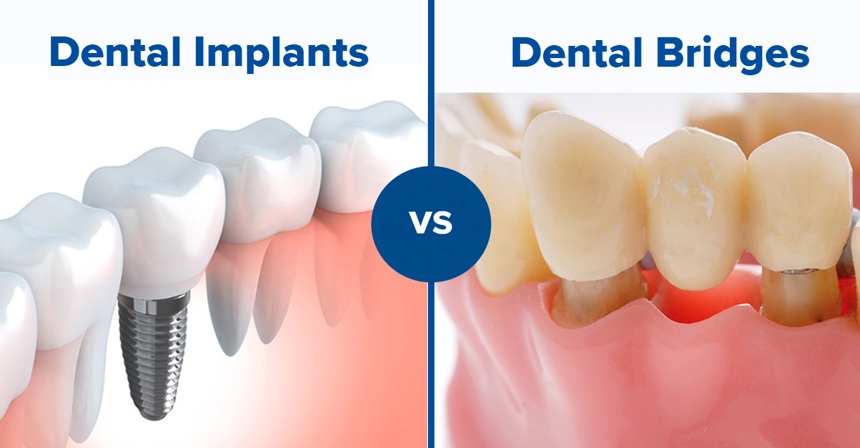
Comparing the two
- Treatment: a bridge is usually completed in a few weeks; an implant involves surgery and several months of healing.
- Neighbouring teeth: a bridge requires shaping them, which is irreversible; an implant usually does not.
- Suitability: implants need adequate bone and good gum health; bone grafting may be required.
- Cleaning: both need careful daily cleaning; bridges need cleaning under the false tooth.
- Cost: implants usually cost more initially.
- Lifespan: both can last many years, but both may need repair or replacement.
Risks
Bridges: supporting teeth can decay or need root canal treatment. Implants: surgical risks including infection, nerve injury and implant failure.
Your dentist will help you weigh these up. Read about the advantages and disadvantages of implants and types of bridges.
Related articles
This article is general information only and does not replace advice from your own dentist. Whether a treatment is suitable for you can only be decided after an examination. All dental treatment carries risks, and results vary from person to person. Any surgical or invasive procedure carries risks. Before proceeding, you should seek a second opinion from an appropriately qualified health practitioner.