
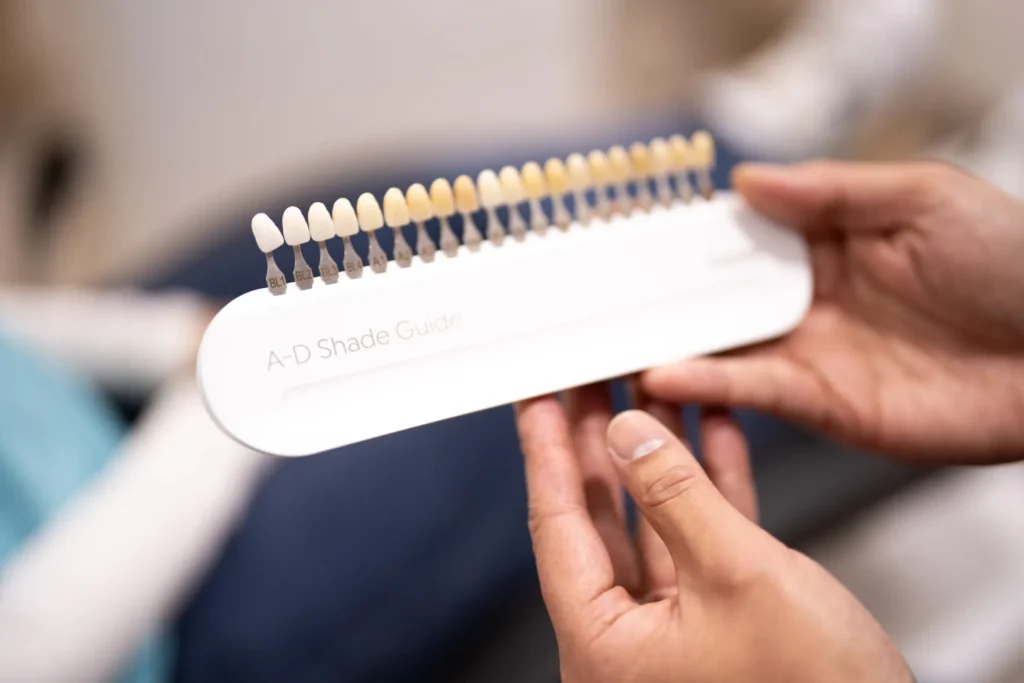
Professional teeth whitening uses a peroxide-based gel to lighten the colour of natural teeth. It does not whiten fillings, crowns or veneers, and results vary depending on the cause of discolouration. Common side effects include temporary tooth sensitivity and gum irritation. A dental examination is required before whitening to check for decay, gum disease and other factors that may make whitening unsuitable.
Given the different causes of discolouration, it is important to have your dentist/oral health therapist thoroughly assess your dental health to determine whether teeth whitening is suitable for you.
We have two teeth whitening treatment options available: Take-home Teeth Whitening and In-Chair Teeth Whitening.
Whitening options are considered after a dental assessment. Your clinician can explain suitability, risks, limitations, instructions and alternatives. Read whitening risks and recovery information.
Custom trays made from a scan of your teeth, with a lower-strength whitening gel that you wear at home, usually for 30 minutes a day over one to two weeks. Includes the trays and gel (items 119 × 2, 927). A dental examination is required first. Prices current at October 2026 and may change.
A whitening appointment in the practice using the SDI Pola Office+ system (items 118 × 12). A higher-strength gel is applied and activated in the chair; sensitivity during and after treatment is common. Some patients follow up with a take-home kit. A dental examination is required first. Prices current at October 2026 and may change.
Whitening may lighten natural teeth, but the degree and duration of colour change vary. Some discolouration responds poorly. Crowns, veneers and tooth-coloured fillings do not whiten in the same way, so colour differences can remain.
Risks and suitability: Tooth sensitivity and irritation of gums or other soft tissues can occur. Incorrect use can cause harm. A dental assessment is needed to identify decay, gum disease, existing sensitivity or other factors that affect suitability. Tell the clinician about pregnancy, breastfeeding, allergies and previous reactions so the proposed method can be assessed.
Treatment and recovery: In-chair and take-home methods use different products and schedules. Follow the specific instructions provided; do not increase concentration, wear time or frequency yourself. Sensitivity or irritation is often temporary and may last a few days, but can persist. Stop using the product and contact the practice if pain or irritation is significant or does not settle. Results may fade; repeat treatment is not automatically appropriate.
Alternatives may include no whitening, removal of surface stains where clinically indicated, or assessment of the cause of an individual discoloured tooth. Whitening is optional and cannot promise a particular shade or improved confidence.
Cosmetic dental treatment options | Treatment risks, recovery and alternatives
In-chair whitening at North Ryde Dentistry is carried out in the practice; take-home whitening includes custom trays and gel. A dental examination is required first to check for decay, gum disease and restorations, which do not whiten.
Common side effects include temporary sensitivity and gum irritation; results vary with the cause of discolouration and fade over time.
Prices current at October 2026 and may change. Read the full risks and considerations.
Access our detailed price guide to understand the investment in your dental care options.