
Root canal therapy has a reputation that worries many people. Knowing what actually happens can help.
Why is it needed?
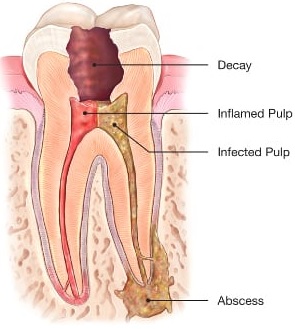
Inside each tooth is soft tissue called the pulp. Deep decay, a crack or trauma can cause the pulp to become inflamed or infected, which can lead to pain, swelling or an abscess. Root canal treatment removes this tissue so the tooth can be kept.
The steps
- The tooth is numbed with local anaesthetic.
- A small opening is made and the infected tissue is removed.
- The canals are cleaned, shaped and disinfected.
- The canals are sealed and the tooth is filled.
- Many back teeth need a crown afterwards to protect them.
Treatment may take one or more appointments.
What does it feel like?
With local anaesthetic, most people find the procedure similar to having a filling. The tooth may be tender for a few days afterwards. Happy gas may be available if you feel anxious.
Risks and alternatives
Root canal treatment does not always succeed; re-treatment, surgery or extraction may be needed later. Instruments can occasionally separate in a canal, and treated teeth can become brittle. The alternative is usually extraction.
Read more about root canal therapy at North Ryde Dentistry.
Related articles
- Root Canal Treatment Cost in North Ryde: What Affects the Fee
- Root Canal Cost: What Affects the Price
- Root Canal Treatment Cost: A Step-by-Step Breakdown
This article is general information only and does not replace advice from your own dentist. Whether a treatment is suitable for you can only be decided after an examination. All dental treatment carries risks, and results vary from person to person. Any surgical or invasive procedure carries risks. Before proceeding, you should seek a second opinion from an appropriately qualified health practitioner.