
A dental implant replaces the root of a missing tooth. Treatment usually takes several months from start to finish.
The usual steps
- Assessment: examination, X-rays and a 3D scan to check the bone and nearby nerves and sinuses.
- Extraction: if a damaged tooth is still present, it is removed.
- Bone grafting (if needed): to build up bone before or during implant placement.
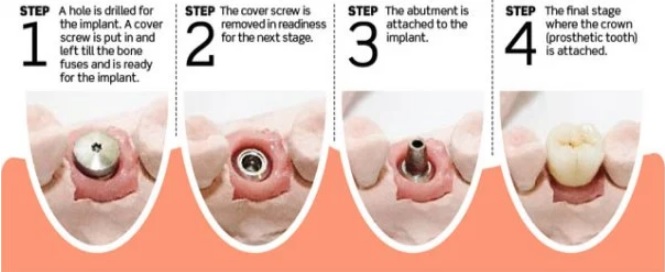
- Implant placement: the titanium post is placed in the jawbone under anaesthetic.
- Healing: usually a few months while the bone bonds to the implant.
- Abutment and crown: a connector and the final crown are fitted.
The overall time frame varies from person to person and can be longer if grafting is needed.
Recovery
Swelling, bruising and discomfort are common for a few days. Follow your dentist’s aftercare instructions and avoid strenuous activity at first.
Implants and dentures
Implants are fixed, while dentures are removable. Implants involve surgery and cost more; dentures are less invasive. Your dentist will explain both.
Risks
Infection, nerve injury, sinus problems and implant failure can occur. Smoking increases the risk.
Related articles
- Tooth Implant vs Bridge: Comparing Your Options
- Full-Arch Dental Implants Explained
- Mini Dental Implants Explained
This article is general information only and does not replace advice from your own dentist. Whether a treatment is suitable for you can only be decided after an examination. All dental treatment carries risks, and results vary from person to person. Any surgical or invasive procedure carries risks. Before proceeding, you should seek a second opinion from an appropriately qualified health practitioner.