
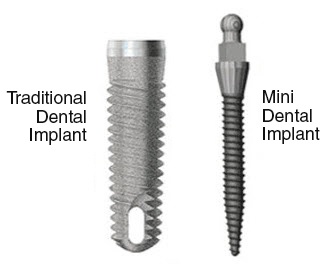
Mini dental implants are narrower versions of standard dental implants. They are sometimes used where there is limited bone, or to help stabilise a lower denture.
How they differ from standard implants
- They have a smaller diameter.
- Placement is usually less extensive, but it is still a surgical procedure performed under local anaesthetic.
- They may be used where bone grafting would otherwise be needed.
Limitations
Mini implants are not suitable for every situation. Because they are narrower, they may not be appropriate for replacing individual back teeth that take heavy biting forces. Your dentist will explain whether mini or standard implants, or another option such as a bridge or denture, suit you.
Who is suitable?
Suitability depends on your bone, gum health, bite and general health. Active gum disease must be treated first.
Risks
Risks include discomfort, swelling, infection, implant loosening or failure, and nerve injury. Ask about your dentist’s training and experience with mini implants.
Read more about dental implants at North Ryde Dentistry.
Related articles
- Full-Arch Dental Implants Explained
- Tooth Implant vs Bridge: Comparing Your Options
- How Is a Dental Implant Placed?
This article is general information only and does not replace advice from your own dentist. Whether a treatment is suitable for you can only be decided after an examination. All dental treatment carries risks, and results vary from person to person. Any surgical or invasive procedure carries risks. Before proceeding, you should seek a second opinion from an appropriately qualified health practitioner.