
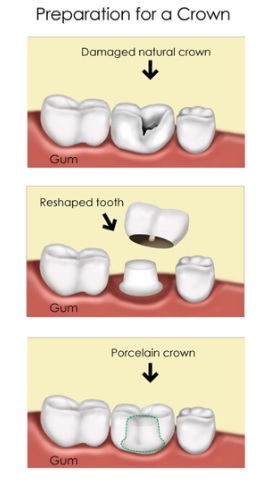
A dental crown covers and protects a tooth that is badly damaged or weakened. Here is what the procedure usually involves.
1. Assessment
Your dentist examines the tooth and takes X-rays to check the nerve and surrounding bone. Sometimes root canal treatment is needed first.
2. Preparing the tooth
The tooth is numbed with local anaesthetic, then shaped to make room for the crown. This removes some tooth structure and cannot be reversed.
3. Scan or impression
A digital scan or impression is taken so the crown fits accurately.
4. Single-visit or two-visit crowns
At North Ryde Dentistry, some ceramic crowns can be designed and milled in the practice and fitted the same day, depending on the tooth and the type of crown needed. Otherwise, a temporary crown is placed while a laboratory makes the final crown, which is fitted at a second appointment.
5. Fitting
The crown is checked for fit, bite and colour, then cemented or bonded in place.
Afterwards
Some sensitivity for a few days is common. Contact us if it continues or the bite feels high. Risks include nerve inflammation, chipping, loosening and decay at the crown edge.
Read more about crowns and bridges.
Related articles
- Choosing the Right Type of Dental Crown
- Dental Crown or Cap: What Is the Difference?
- How Much Do Dental Crowns Cost? What Affects the Fee
This article is general information only and does not replace advice from your own dentist. Whether a treatment is suitable for you can only be decided after an examination. All dental treatment carries risks, and results vary from person to person. Any surgical or invasive procedure carries risks. Before proceeding, you should seek a second opinion from an appropriately qualified health practitioner.