
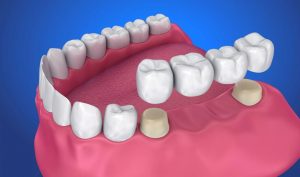
If you have one or more missing teeth, the main options are a removable denture, a fixed bridge or a dental implant. Each has different costs, benefits and risks.
How the options compare
- Removable denture: usually the lowest initial cost and non-invasive, but can feel loose and needs periodic relining or replacement.
- Bridge: fixed in place and usually completed in a few weeks. The teeth either side of the gap are shaped to support crowns, which is irreversible.
- Implant: does not rely on neighbouring teeth, but involves surgery, several months of treatment and usually a higher cost.
What affects the cost of a bridge?
- The number of units (a common bridge has two supporting crowns and one replacement tooth).
- The material: porcelain-fused-to-metal or all-ceramic.
- Any treatment needed first on the supporting teeth.
You will receive a written quote after an examination. Payment plans are available for eligible patients.
How long do bridges last?
This varies with the design, the health of the supporting teeth and cleaning. Bridges can eventually need repair or replacement, and the supporting teeth can decay or need root canal treatment.
Read about types of bridges and implants vs bridges.
Related articles
- Why Replace a Missing Tooth? Considering a Bridge
- Tooth Implant vs Bridge: Comparing Your Options
- Types of Dental Bridges
This article is general information only and does not replace advice from your own dentist. Whether a treatment is suitable for you can only be decided after an examination. All dental treatment carries risks, and results vary from person to person. Any surgical or invasive procedure carries risks. Before proceeding, you should seek a second opinion from an appropriately qualified health practitioner. Payment plans are subject to eligibility, terms and approval.