
If you have something stuck between teeth, rinse hard with warm water, then gently use dental floss, an interdental brush or a water flosser to work it out. Never dig at it with a pin, knife or other sharp object. If it won’t budge after a day of gentle attempts, or the gum becomes painful or swollen, see a dentist.
Trapped food is usually more annoying than dangerous, but a stubborn piece can inflame the gum, and food that catches in the same place again and again often points to a problem that needs attention.
This guide covers safe removal, what to avoid and when to get help. For problems that can’t wait, see what counts as a dental emergency.
When to get urgent help
Food caught in the throat is different from food caught between the teeth. Call 000 or go to your nearest hospital emergency department if you or your child has:
- difficulty breathing, choking, or trouble swallowing (including a fish bone or other object that feels stuck in the throat)
- swelling spreading to the eye, neck or floor of the mouth
- bleeding that won’t stop after 15–20 minutes of firm pressure
- a possible broken jaw, or a knock to the head with loss of consciousness, vomiting or confusion
If you’re unsure whether you need to be seen tonight, call healthdirect on 1800 022 222 for 24/7 nurse advice.
How to remove something stuck between teeth
Work through these steps in order, gently. Most trapped food comes out within the first two or three.
- Rinse. Swish warm water firmly around your mouth, pushing it between your teeth. This can loosen soft food.
- Floss. Slide a length of floss gently between the teeth with a back-and-forth motion. Curve it into a C shape against the side of each tooth and move it up and down, including just under the gumline. Don’t snap it down onto the gum.
- Try a knot. If plain floss slides past the food, tie a small knot in the middle of the floss and gently pull the knot through the gap. The knot can catch and drag out fibres and husks.
- Use an interdental brush. Choose a size that fits the gap without forcing. Push it gently through from the cheek side and move it back and forth a few times.
- Try a water flosser. If you have one, a stream of water aimed along the gumline can flush out small pieces. Start on a low setting.
- Brush and rinse with warm salty water. Brush gently around the area, then rinse with half a teaspoon of salt dissolved in a glass of warm water to soothe irritated gum.
If the gum is sore, over-the-counter pain relief such as paracetamol or ibuprofen, taken as directed on the pack, may help if it’s safe for you. If it feels tender or swollen from outside, hold ice wrapped in a cloth against your cheek for 10–15 minutes at a time.
What not to use
When something won’t shift it is tempting to grab whatever is nearby. Avoid:
- Pins, needles, paperclips and knives. These can cut the gum, scratch enamel, damage fillings and introduce bacteria.
- Forcing a toothpick. Jamming a toothpick into the gap can push food deeper under the gum or splinter off. If you use one, keep it gentle and angled along the tooth.
- Fingernails. They carry bacteria and can tear the gum.
- Pulling hard on floss that is stuck. If floss catches or shreds, let go of one end and pull it out sideways rather than yanking it up, which could lift a filling or crown.
Why popcorn husks and small seeds cause problems
Popcorn husks, seed shells and small fibres are thin and sharp enough to slip below the gumline, where floss may not reach them. Trapped there, they can irritate the gum and lead to a gum abscess, a painful pocket of infection. Signs include throbbing pain, a swollen red bump on the gum, a bad taste, or pus.
A gum abscess needs to be seen by a dentist. Our emergency dentist in North Sydney aims to see urgent problems as soon as possible, often on the same day. Your dentist can remove the object, clean and drain the area and advise on aftercare. Don’t try to squeeze or pierce the swelling yourself.
When food keeps getting stuck in the same place
If food traps in the same spot most days, the teeth themselves may be telling you something. Common reasons include:
- a small gap between teeth, where they no longer touch firmly
- a hole from decay on the side of a tooth
- a broken, worn or rough filling, or a filling with an overhanging edge
- a cracked tooth or a chipped edge
- receding gums or gum pockets from gum disease
- a crown or bridge that no longer fits closely
These are usually easy to spot at a check-up with an examination and X-rays. Fixing the cause, for example by replacing a filling, can stop the food trapping and protect the neighbouring teeth and gum. Regular teeth cleaning also removes the plaque and tartar that make trapped food more irritating.
When to see a dentist
Book an appointment if:
- you can’t remove the object after a day of gentle attempts
- the gum is painful, swollen or keeps bleeding
- you notice a bad taste, pus or a lump on the gum
- you felt a piece of tooth or filling come away
- food traps in the same place again and again
Regular check-ups at our North Sydney practice are part of our preventive dentistry care and can pick up these problems early.
Frequently asked questions
How long can food stay stuck between teeth?
Try not to leave it for more than a day or so. Food trapped against the gum can cause soreness and, over time, a gum infection. If gentle flossing and rinsing don’t work within a day, see a dentist.
Can a dentist remove something stuck between my teeth?
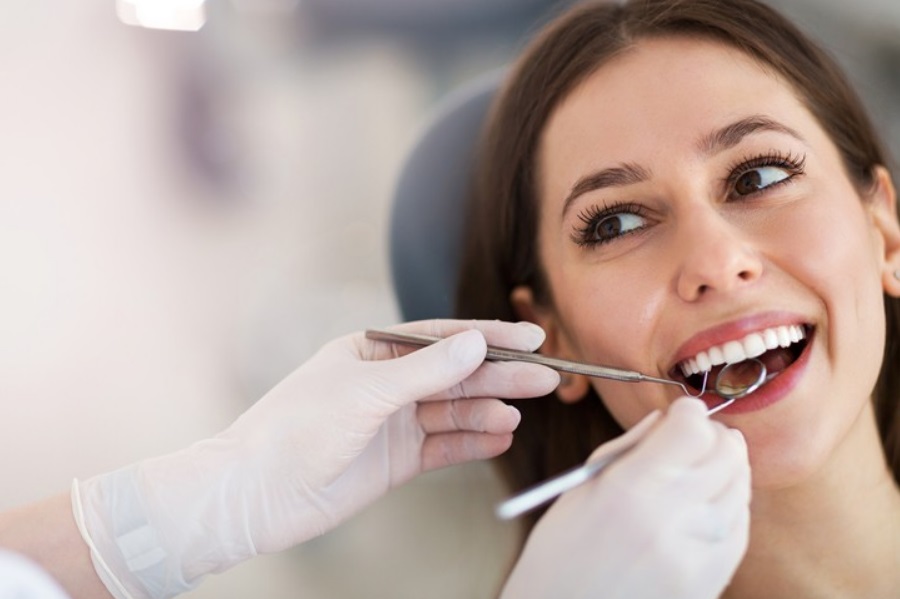
Yes. A dentist can remove trapped food or objects gently with the right instruments, check the gum for infection and look for any cause, such as a broken filling or cavity.
Is it safe to use a toothpick?
A toothpick used gently along the tooth is generally fine, but don’t force it into the gap. Floss, interdental brushes and water flossers are usually gentler options.
Why does food always get stuck between the same teeth?
It often means there is a small gap, a cavity, a rough or broken filling, or gum recession in that spot. Your dentist can find the cause and discuss how to fix it.
Need help now?
North Sydney Dentistry is at Level 1, Suite 102/71 Walker St, North Sydney, a two-minute walk from North Sydney station. We’re open Monday to Friday, 9am to 6pm, and keep time aside for urgent problems where we can. Call (02) 8090 1108 or book online.
This article is general information only and is not a substitute for advice from your own dentist or doctor. Any surgical or invasive procedure carries risks. Before proceeding, you should seek a second opinion from an appropriately qualified health practitioner.